

NLSUI OPAC header image
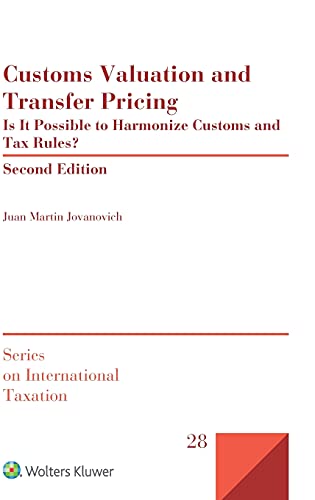
Amazon cover image
Image from Amazon.com

Customs valuation and transfer pricing : Is it possible to harmonize customs and tax rules? / Juan Martin Jovanovich.

By: Series: Series on international taxation ; volume 28Publisher: Alphen aan den Rijn, The Netherlands : Kluwer Law International B.V., [2018]Edition: Second editionDescription: xiii, 191 pages ; 25 cmContent type:
  • text
Media type:
  • unmediated
Carrier type:
  • volume
ISBN:
  • 9789041161345 (hardcover : acidfree paper)
Subject(s): DDC classification:
  • 343.056 JOV
LOC classification:
  • K4640.A66 J68 2018
Contents:
About this book: Customs Valuation and Transfer Pricing helps customs administrations to examine the acceptability of a transaction value fixed between related parties in determining the customs value and assists multinational companies in determining acceptable transfer prices for customs purposes and in preparing supporting documentation. Issues of transfer pricing have come to the fore in both international tax and customs regimes. In particular, the problem of how to apply the two systems of valuation to the same transaction is of widespread concern. This well-known book, now in a fully updated second edition, is a problem-solving guide for professionals charged with valuating transactions in their client's or company's best interests. Through detailed examination of relevant guidelines, transfer pricing methodologies, and business realities prevailing among multinational enterprises, it offers a cogent and convincing account of how tax and customs transfer pricing regimes may be harmonized. What's in this book: The second edition incorporates many of the relevant intervening international developments in the field; for example, the most recent commentaries, case studies, and draft instruments of the Technical Committee on Customs Valuation and rulings issued by the United States. Among other essential elements, the author discusses the following in depth: the OECD Transfer Pricing Guidelines; the GATT/WTO Customs Valuation Code (GVC) and other valuation rules in key jurisdictions and regional agreements; the OECD and UN model tax conventions; the arm's length principle; methods, both traditional and new, of determining whether the parties' relationship influenced the price; and additions to and deductions from the customs value. This second edition discusses new developments in the field, including a chapter on Commentary 23.1 and Case Study 14.1 of the Technical Committee on Customs Valuation of the World Customs Organization (WCO) - the first international instruments linking transfer pricing and customs valuation. The book concludes with an analysis of the circumstances and conditions under which the introduction of transfer pricing year-end adjustments to transaction value would be consistent with Article 1 of the GVC.
Star ratings
    Average rating: 0.0 (0 votes)
Holdings
Item type Current library Collection Shelving location Call number Materials specified Status Barcode
BOOKs . Reference Library Compactors 343.056 JOV (Browse shelf(Opens below)) HB Available 37017

Includes bibliographical references (pages 179-184) and index.

About this book:
Customs Valuation and Transfer Pricing helps customs administrations to examine the acceptability of a transaction value fixed between related parties in determining the customs value and assists multinational companies in determining acceptable transfer prices for customs purposes and in preparing supporting documentation. Issues of transfer pricing have come to the fore in both international tax and customs regimes. In particular, the problem of how to apply the two systems of valuation to the same transaction is of widespread concern. This well-known book, now in a fully updated second edition, is a problem-solving guide for professionals charged with valuating transactions in their client's or company's best interests. Through detailed examination of relevant guidelines, transfer pricing methodologies, and business realities prevailing among multinational enterprises, it offers a cogent and convincing account of how tax and customs transfer pricing regimes may be harmonized.


What's in this book:


The second edition incorporates many of the relevant intervening international developments in the field; for example, the most recent commentaries, case studies, and draft instruments of the Technical Committee on Customs Valuation and rulings issued by the United States. Among other essential elements, the author discusses the following in depth:
the OECD Transfer Pricing Guidelines; the GATT/WTO Customs Valuation Code (GVC) and other valuation rules in key jurisdictions and regional agreements; the OECD and UN model tax conventions; the arm's length principle; methods, both traditional and new, of determining whether the parties' relationship influenced the price; and additions to and deductions from the customs value.

This second edition discusses new developments in the field, including a chapter on Commentary 23.1 and Case Study 14.1 of the Technical Committee on Customs Valuation of the World Customs Organization (WCO) - the first international instruments linking transfer pricing and customs valuation. The book concludes with an analysis of the circumstances and conditions under which the introduction of transfer pricing year-end adjustments to transaction value would be consistent with Article 1 of the GVC.