
NLSUI OPAC header image
Amazon cover image
Image from Amazon.com

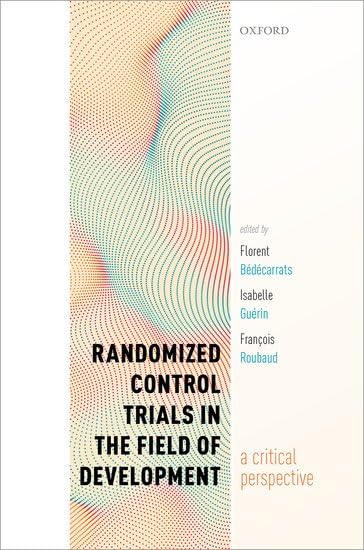
Randomized control trials in the field of development : a critical perspective / edited by Florent Bédécarrats, Isabelle Guérin, François Roubaud.

Contributor(s): Publisher: Oxford : Oxford University Press, 2020Description: xvii, 423 pages : illustrations (black and white, and colour). ; 25 cmContent type:
  • text
  • still image
Media type:
  • unmediated
Carrier type:
  • volume
ISBN:
  • 9780198865360
  • 0198865368
Subject(s): Online resources: In October 2019, Abhijit Banerjee, Esther Duflo, and Michael Kremer jointly won the 51st Sveriges Riksbank Prize in Economic Sciences in Memory of Alfred Nobel "for their experimental approach to alleviating global poverty." But what is the exact scope of their experimental method, known as randomized control trials (RCTs)? Which sorts of questions are RCTs able to address and which do they fail to answer? The first of its kind, Randomized Control Trials in theField of Development: A Critical Perspective provides answers to these questions, explaining how RCTs work, what they can achieve, why they sometimes fail, how they can be improved and why other methods are both useful and necessary. Bringing together leading specialists in the field from a range of0backgrounds and disciplines (economics, econometrics, mathematics, statistics, political economy, socioeconomics, anthropology, philosophy, global health, epidemiology, and medicine), it presents a full and coherent picture of the main strengths and weaknesses of RCTs in the field of development. Looking beyond the epistemological, political, and ethical differences underlying many of the disagreements surrounding RCTs, it explores the implementation of RCTs on the ground, outside of their ideal theoretical conditions and reveals some unsuspected uses and effects, their disruptive potential, but also their political uses. The contributions uncover the implicit worldview that many RCTs draw on and disseminate, and probe the gap between the method's narrow scope and its success, while also proposing improvements and alternatives. 0Without disputing the contribution of RCTs to scientific knowledge, Randomized Control Trials in the Field of Development warns against the potential dangers of their excessive use, arguing that the best use for RCTs is not necessarily that which immediately springs to mind.
Star ratings
    Average rating: 0.0 (0 votes)
Holdings
Item type Current library Status Barcode
Open Access Books - Publishers . Available OABP290

Includes bibliographical references and index.

In October 2019, Abhijit Banerjee, Esther Duflo, and Michael Kremer jointly won the 51st Sveriges Riksbank Prize in Economic Sciences in Memory of Alfred Nobel "for their experimental approach to alleviating global poverty." But what is the exact scope of their experimental method, known as randomized control trials (RCTs)? Which sorts of questions are RCTs able to address and which do they fail to answer? The first of its kind, Randomized Control Trials in theField of Development: A Critical Perspective provides answers to these questions, explaining how RCTs work, what they can achieve, why they sometimes fail, how they can be improved and why other methods are both useful and necessary. Bringing together leading specialists in the field from a range of0backgrounds and disciplines (economics, econometrics, mathematics, statistics, political economy, socioeconomics, anthropology, philosophy, global health, epidemiology, and medicine), it presents a full and coherent picture of the main strengths and weaknesses of RCTs in the field of development. Looking beyond the epistemological, political, and ethical differences underlying many of the disagreements surrounding RCTs, it explores the implementation of RCTs on the ground, outside of their ideal theoretical conditions and reveals some unsuspected uses and effects, their disruptive potential, but also their political uses. The contributions uncover the implicit worldview that many RCTs draw on and disseminate, and probe the gap between the method's narrow scope and its success, while also proposing improvements and alternatives. 0Without disputing the contribution of RCTs to scientific knowledge, Randomized Control Trials in the Field of Development warns against the potential dangers of their excessive use, arguing that the best use for RCTs is not necessarily that which immediately springs to mind.