

Library Catalogue
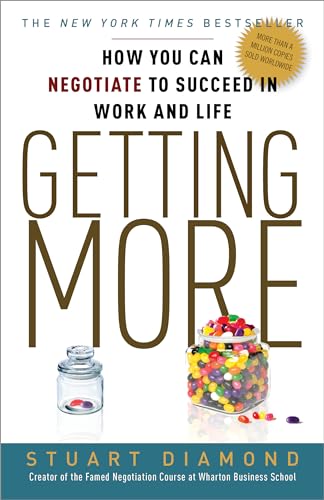
| Item type | Current library | Collection | Shelving location | Call number | Status | Barcode | |
|---|---|---|---|---|---|---|---|
 BOOKs
BOOKs
|
. | MPP SECTIO | MPP Section | 158.5 DIA (Browse shelf(Opens below)) | Available | 35326 |

|

|

|

|

|

|

|
||
| 153.42 KAH Thinking, fast and slow | 155.8 SHI Cross-cultural psychology | 155.9 COH States of denial | 158.5 DIA Getting more | 160 COT Critical thinking skills | 191 REC Selected writngs | 201.7309 TOM Religions and development |
Communication - Business
Negotiation - Pschological Aspects
Success - U S A
Description:
There are 6 key tools for negotiation that are “almost invisible to everyone”:
1) Be dispassionate
2) Prepare
3) Find the Decision Maker
4) Focus on goals, not who is right.
5) Make human contact
6) Acknowledge the other party’s position and power, valuing them.
“Emotions and perceptions are far more important than power and logic in dealing with others.
“Anything you do in a negotiation should explicitly bring you closer to your goals for that particular negotiation. Otherwise, it is irrelevant or damaging to you.”
“Find out what third parties they respect and who can help you.”
“When people are irrational, they are emotional. When they are emotional, they can’t listen. When they can’t listen, they can’t be persuaded.”
“The right answer to the statement “I hate you is “Tell me more.” You learn what they are thinking or feeling, so that you can better persuade them.
“Take small steps. Lead people from the pictures in their heads to your goals.”
“Find out what the other party cares about and doesn’t care about, big and small, tangible and intangible, in the deal or outside the deal, rational and emotional.
“Name their bad behaviour when they are not consistent with their own policies.”
“Don’t deceive people. They will find out.”
“The most important asset you have in any human interaction is your credibility. If people don’t believe you, it’s hard to convince them of anything.”
“Embrace differences: it leads to more ideas, more options, better negotiations, better results.
“The moment you use raw power over someone, the relationship is usually over.”
“Focusing on people will get you much more. Even in a transactional situation, people are 5 times as likely to help you if you treat them as individuals. The numbers are staggering: 90 percent versus about 15 percent willing to help.”
“Explaining your perceptions is the last thing you should do. First, learn their perceptions.”