
NLSUI OPAC header image
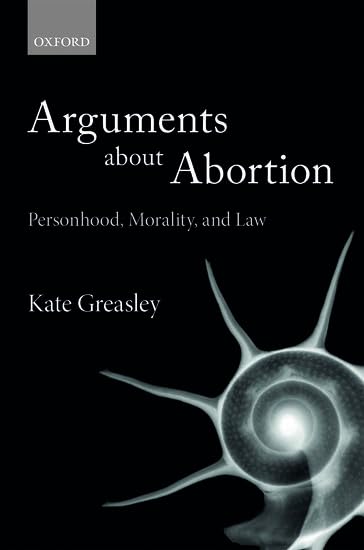
Amazon cover image
Image from Amazon.com

Arguments about abortion : Personhood, morality, and law / Kate Greasley, Lecturer in Law, University College London.

By: Publisher: Oxford : Oxford University Press, 2017Edition: First editionDescription: ix, 269 pages ; 24 cmContent type:
  • text
Media type:
  • unmediated
Carrier type:
  • volume
ISBN:
  • 9780198766780
  • 0198766785
  • 9780198806608
  • 0198806604
Subject(s): DDC classification:
  • 342.084 GRE 23
LOC classification:
  • K5181 .G74 2017
Contents:
What should abortion argument be about? -- Gestation as good samaritanism -- Abortion as justified homicide -- Analogical arguments and sex equality -- Personhood thresholds, arbitrariness, and 'punctualism' -- Dualism, substantial identity, and the precautionary principle -- Gradualism and human embodiment -- Human equality and the significance of birth -- Regulating abortion -- Selective abortion : sex and disability -- Matters of conscience.
Does the morality of abortion depend on the moral status of the human fetus? Must the law of abortion presume an answer to the question of when personhood begins? Can a law which permits late abortion but not infanticide be morally justified? These are just some of the questions this book sets out to address. With an extended analysis of the moral and legal status of abortion, Kate Greasley offers an alternative account to the reputable arguments of Ronald Dworkin and Judith Jarvis Thomson and instead brings the philosophical notion of 'personhood' to the foreground of this debate. Structured in three parts, the book will (I) consider the relevance of prenatal personhood for the moral and legal evaluation of abortion; (II) trace the key features of the conventional debate about when personhood begins and explore the most prominent issues in abortion ethics literature: the human equality problem and the difference between abortion and infanticide; and (III) examine abortion law and regulation as well as the differing attitudes to selective abortion. The book concludes with a snapshot into the current controversy surrounding the scope of the right to conscientiously object to participation in abortion provision --Flap of cover.
Star ratings
    Average rating: 0.0 (0 votes)
Holdings
Item type Current library Shelving location Call number Materials specified Status Barcode
BOOKs . General Stacks 342.084 GRE (Browse shelf(Opens below)) PB Available 37964

Includes bibliographical references (pages 263-266) and index.

What should abortion argument be about? -- Gestation as good samaritanism -- Abortion as justified homicide -- Analogical arguments and sex equality -- Personhood thresholds, arbitrariness, and 'punctualism' -- Dualism, substantial identity, and the precautionary principle -- Gradualism and human embodiment -- Human equality and the significance of birth -- Regulating abortion -- Selective abortion : sex and disability -- Matters of conscience.

Does the morality of abortion depend on the moral status of the human fetus? Must the law of abortion presume an answer to the question of when personhood begins? Can a law which permits late abortion but not infanticide be morally justified? These are just some of the questions this book sets out to address. With an extended analysis of the moral and legal status of abortion, Kate Greasley offers an alternative account to the reputable arguments of Ronald Dworkin and Judith Jarvis Thomson and instead brings the philosophical notion of 'personhood' to the foreground of this debate. Structured in three parts, the book will (I) consider the relevance of prenatal personhood for the moral and legal evaluation of abortion; (II) trace the key features of the conventional debate about when personhood begins and explore the most prominent issues in abortion ethics literature: the human equality problem and the difference between abortion and infanticide; and (III) examine abortion law and regulation as well as the differing attitudes to selective abortion. The book concludes with a snapshot into the current controversy surrounding the scope of the right to conscientiously object to participation in abortion provision --Flap of cover.