

Library Catalogue
| Item type | Current library | Shelving location | Call number | Materials specified | Status | Notes | Date due | Barcode | |
|---|---|---|---|---|---|---|---|---|---|
 BOOKs
BOOKs
|
. | 346.82 (Browse shelf(Opens below)) | Available | OABP671 | |||||
|
BOOKs
|
. | General Stacks | 346.82 ALE (Browse shelf(Opens below)) | HB | Checked out | Recommended by Dr. Arul George Scaria | 28.07.2025 | 39664 |
Includes bibliographical references and index.
Introduction -- Early encounters : protecting maps and atlases 1400-1700 -- Enlightenment mapmaking and lawmaking Part One : the legislation -- Enlightenment mapmaking and lawmaking Part Two : the litigation -- Legal highways and byways : road books in court -- Public surveys, national maps : the rise of the ordnance survey -- Shipwrecks and copyrights : hydrographic information and the UK hydrographic office -- 'A painted sssemblage of facts' : private mapmaking in the nineteenth century -- The twentieth century : for crown and country -- Conclusion.
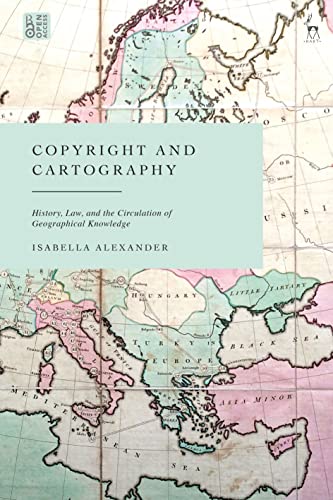
"This open access book explores the intertwined histories of mapmaking and copyright law in Britain from the early modern period up to World War 1, focusing chiefly on the 18th and 19th centuries. Taking a multidisciplinary approach and making extensive use of the archival record, this is the first detailed, historical account of the relationship between maps and copyright. As such, it examines how the emergence and development of copyright law affected mapmakers and the map trade and how the application of copyright law to the field of mapmaking affected the development of copyright doctrine. Its explorations cast new light on the circulation of geographical knowledge, different cultures of authorship and creativity, and connections between copyright law, print culture, technology, and society. The book will be of interest to legal historians, intellectual property scholars, and historians of the map and print culture, as well as those interested in the history of knowledge and how legal control over data has been exerted over time. It takes the reader back to the earliest attempts to establish who can own and control geographical information and its graphic representation in the form of a map. In so doing, it establishes a long history of tension between the interests of private enterprise, government, and the public. The book's investigations end in the first decades of the 20th century, but the tensions it identifies persist in the 21st century, although today paper maps have been largely replaced by web-based mapping platforms and digital geospatial data. The eBook editions of this book are available open access under a CC BY-NC-ND 4.0 licence on bloomsburycollections.com. Open access was funded by the Australian Research Council"-- Provided by publisher.