
Search the Library Catalogue
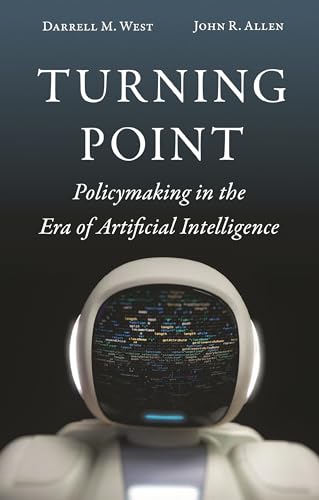
Image from Amazon.com
Turning point : policymaking in the era of artificial intelligence /
Publication details: Washington D C Brookings Institution Press 2020Description: xvii, 277 pages 20 cmISBN:- 9780815739500 (Paperback)
- 006.3
Contents:
Summary: "The book offers major recommendations for actions that governments, businesses, and individuals can take to promote trustworthy and responsible artificial intelligence. Their recommendations include: creation of ethical principles, strengthening government oversight, defining corporate culpability, establishment of advisory boards at federal agencies, using third-party audits to reduce biases inherent in algorithms, tightening personal privacy requirements, using insurance to mitigate exposure to AI risks, broadening decision-making about AI uses and procedures, penalizing malicious uses of new technologies, and taking pro-active steps to address how artificial intelligence affects the workforce"-- Provided by publisher.
Preface -- What is AI? -- Healthcare -- Education -- Transportation -- E-Commerce -- Defense -- Techlash -- Ethical Safeguards -- Building Responsible AI -- Glossary of Key Terms -- Notes -- Index
| Item type | Current library | Shelving location | Call number | Materials specified | Status | Notes | Barcode | |
|---|---|---|---|---|---|---|---|---|
 BOOKs
BOOKs
|
. | General Stacks | 006.3 WES (Browse shelf(Opens below)) | PB | Available | Recommended by Mr. Amlan Mohanty | 39749 |
Preface -- What is AI? -- Healthcare -- Education -- Transportation -- E-Commerce -- Defense -- Techlash -- Ethical Safeguards -- Building Responsible AI -- Glossary of Key Terms -- Notes -- Index
"The book offers major recommendations for actions that governments, businesses, and individuals can take to promote trustworthy and responsible artificial intelligence. Their recommendations include: creation of ethical principles, strengthening government oversight, defining corporate culpability, establishment of advisory boards at federal agencies, using third-party audits to reduce biases inherent in algorithms, tightening personal privacy requirements, using insurance to mitigate exposure to AI risks, broadening decision-making about AI uses and procedures, penalizing malicious uses of new technologies, and taking pro-active steps to address how artificial intelligence affects the workforce"-- Provided by publisher.