
NLSUI OPAC header image
Amazon cover image
Image from Amazon.com

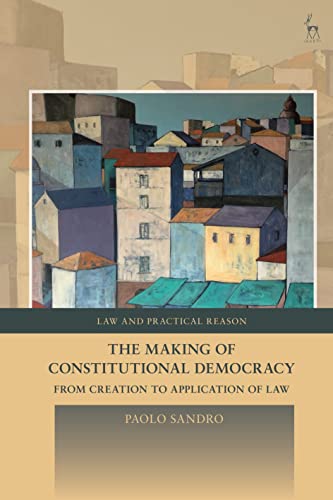
The making of constitutional democracy : from creation to application of law / Paolo Sandro.

By: Series: Law and practical reason ; volume 13Publisher: Oxford ; New York : Hart, 2021Description: xi, 317 pages : illustrations ; 24 cmContent type:
  • text
Media type:
  • unmediated
Carrier type:
  • volume
ISBN:
  • 9781509905225
  • 9781509955213
Subject(s): Additional physical formats: Online version:: Making of constitutional democracyOnline resources:
Contents:
Introduction / Aims and Structure of the Wor -- Law, power, and political authority : on the scope and limitations of the work -- The dependence of constitutional democracy on the distinction between creation and application of law -- A critical evaluation of moderate legal realism -- Towards a unified account of discretion in law -- Law and language and as language : an alternative picture of a multifaceted relationship -- Creation and application of law : an analytical distinction -- The separation of powers : a meta-theoretical reassessment.
Summary: "This book addresses a palpable, yet widely neglected, tension in legal discourse. In our everyday legal practices - whether taking place in a courtroom, classroom, law firm, or elsewhere - we routinely and unproblematically talk of the activities of creating and applying law. However, when legal scholars have analysed this distinction in their theories (rather than simply assuming it), many have undermined it, if not dismissed it as untenable. The book considers the relevance of distinguishing between law-creation and law-application and how this transcends the boundaries of jurisprudential enquiry. It argues that such a distinction is also a crucial component of political theory. For if there is no possibility of applying a legal rule that was created by a different institution at a previous moment in time, then our current constitutional-democratic frameworks are effectively empty vessels that conceal a power relationship between public authorities and citizens that is very different from the one on which constitutional democracy is grounded. After problematising the most relevant objections in the literature, the book presents a comprehensive defence of the distinction between creation and application of law within the structure of constitutional democracy. It does so through an integrated jurisprudential methodology, which combines insights from different disciplines (including history, anthropology, political science, philosophy of language, and philosophy of action) while also casting new light on long-standing issues in public law, such as the role of legal discretion in the law-making process and the scope of the separation of powers doctrine"-- Provided by publisher.
Star ratings
    Average rating: 0.0 (0 votes)
Holdings
Item type Current library Status Barcode
Open Access Books - Publishers . Available OABP655

Based on author's thesis (doctoral - University of Edinburgh, 2014) issued under title: Creation and application of law : a neglected distinction.

Includes bibliographical references and index.

Introduction / Aims and Structure of the Wor -- Law, power, and political authority : on the scope and limitations of the work -- The dependence of constitutional democracy on the distinction between creation and application of law -- A critical evaluation of moderate legal realism -- Towards a unified account of discretion in law -- Law and language and as language : an alternative picture of a multifaceted relationship -- Creation and application of law : an analytical distinction -- The separation of powers : a meta-theoretical reassessment.

"This book addresses a palpable, yet widely neglected, tension in legal discourse. In our everyday legal practices - whether taking place in a courtroom, classroom, law firm, or elsewhere - we routinely and unproblematically talk of the activities of creating and applying law. However, when legal scholars have analysed this distinction in their theories (rather than simply assuming it), many have undermined it, if not dismissed it as untenable. The book considers the relevance of distinguishing between law-creation and law-application and how this transcends the boundaries of jurisprudential enquiry. It argues that such a distinction is also a crucial component of political theory. For if there is no possibility of applying a legal rule that was created by a different institution at a previous moment in time, then our current constitutional-democratic frameworks are effectively empty vessels that conceal a power relationship between public authorities and citizens that is very different from the one on which constitutional democracy is grounded. After problematising the most relevant objections in the literature, the book presents a comprehensive defence of the distinction between creation and application of law within the structure of constitutional democracy. It does so through an integrated jurisprudential methodology, which combines insights from different disciplines (including history, anthropology, political science, philosophy of language, and philosophy of action) while also casting new light on long-standing issues in public law, such as the role of legal discretion in the law-making process and the scope of the separation of powers doctrine"-- Provided by publisher.