

Library Catalogue
| Item type | Current library | Shelving location | Call number | Materials specified | Status | Notes | Barcode | |
|---|---|---|---|---|---|---|---|---|
 BOOKs
BOOKs
|
. | General Stacks | 940.53 SIM (Browse shelf(Opens below)) | PB | Available | Recommended by Mr. Kunal Ambasta | 40190 |

|

|
|

|

|

|

|
||
| 940.53 ARE Eichmann in Jerusalem : | 940.53 PAN - 1 The architecture of return in civil war: (Bosnia Herzegovina and Sierra Leone) | 940.53 PAN - 2 The architecture of return in civil war: (Bosnia Herzegovina and Sierra Leone) | 940.53 SIM In the highest degree Odious : Detention without trial in wartime Britain / | 940.5315 SPI The Complete Maus : | 940.54 SAI The Last Heroes : Foot Soldiers of Indian Freedom | 940.540954 MEH The portrait of a secret: A novel inspired by a true event / |
Abbreviations;
1 The Invention of Executive Detention;
2 Regulation 14B and its Progeny;
3 Emergency Planning between the Wars;
4The Commons Revolt;
5 Detention during the Phoney War;
6 The Defeat of Liberalism;
2 Fascism and the Fears of 1940;
8 The British Fifth Column;
9 The Great Incarceration Begins;
10 It Might Have Happened to You!;
11 The Experience of Detention;
12 The Bureaucracy under Stress;
13 The Integrity of the Advisory Committee;
14 The Early Challenges in the Courts;
15 The Courts in Confusion;
16 The Web of Suspicion;
17 The Leading Cases in Context;
18 The Declining Years of Regulation r8B;
19 Death and Post Mortem;
Appendices:
I The Principal Texts;
II Note on Sources;
III Spy Trials;
IV Tyler Kent and Anna Wolkoff;
V Mosley's 'Reasons for Order';
Bibliography;
Index.
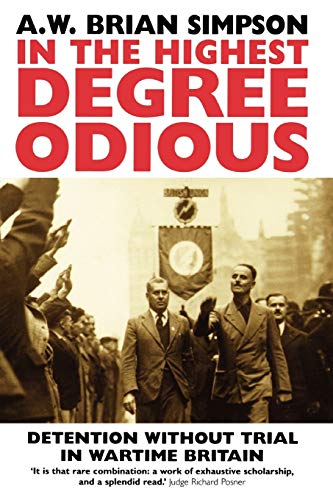
During the Second World War, just under two thousand British citizens were detained without charge, trial, or term set, under Regulation 18B of the wartime Defence Regulations. Most of these detentions took place in the summer of 1940, soon after Winston Churchill became Prime Minister, when belief in the existence of a dangerous Fifth Column was widespread. Churchill, at first an enthusiast for vigorous use of the powers of executive detention, later came to lament the use of a power which was, in his words, `in the highest degree odious'.
This book provides the first comprehensive study of Regulation 18B and its precursor in the First World War, Regulation 14B. Based on extensive use of primary sources, it describes the complex history of wartime executive detention: the purposes which it served, the administrative procedures and safeguards employed, the conflicts between the Home Office and the Security Service which surrounded its use, the part played by individuals, by Parliament, and by the courts in restraining abuse of executive power, and the effect of detention upon the lives of individuals concerned, very few of whom constituted any threat to national security. Much of what was done was kept secret at the time, and even today the authorities continue to refuse access to many of the papers which have escaped deliberate destruction. This study is the first to attempt to penetrate the veil of secrecy and tell the story of the gravest invasion of civil liberty which has occurred in Britain this century.