

Library Catalogue
| Item type | Current library | Shelving location | Call number | Materials specified | Status | Notes | Date due | Barcode | |
|---|---|---|---|---|---|---|---|---|---|
 BOOKs
BOOKs
|
. | Circulation Counter | 338.91 MAD (Browse shelf(Opens below)) | PB | Checked out | Recommended by Prof. Dr. Arul George Scaria | 09.03.2026 | 40545 |

|

|

|

|

|

|

|
||
| 338.5 PIN - 7 Microeconomics / | 338.9 KOT-2 Pluriverse: | 338.9009 REI How rich countries got rich and why poor countries stay poor / | 338.91 MAD Technocolonialism : when technology for good is harmful / | 338.95 HUA East Asian development model : Twenty-first century perspectives / | 340 MIC-1 The Economic Approach to Law / | 340 YEU-2 An introduction to law and regulation : text and materials / |
Abbreviations -
Introduction -
1. The Logics of Digital Humanitarianism -
2. Biometric Infrastructures -
3. Extracting Data and the Illusion of Accountability -
4. Surreptitious Experimentation: Enchantment, Coloniality and Control -
5. The Humanitarian Machine: Automating Harm -
6. Mundane Resistance: Contesting Technocolonialism in Everyday Life -
Conclusion: Technocolonialism as Infrastructural Violence -
A Note on Research Methods -
Acknowledgements -
Notes -
References -
Index.
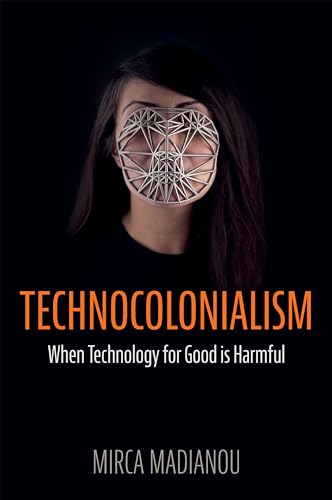
"With over 300 million people in need of humanitarian assistance and with emergencies and climate disasters becoming ever more common, AI and big data are being championed as a force for good and as a solution to the complex challenges of the aid sector. This book argues, on the contrary, that digital innovation, data and AI practices entrench power asymmetries and engender new inequities between the global south and north. Madianou develops a new concept, technocolonialism, to capture how the convergence of digital developments with humanitarian structures, state power and market forces reinvigorates and reshapes colonial legacies. The concept of technocolonialism shifts the attention to the constitutive role that digital infrastructures, data and AI play in accentuating inequities between aid providers and people in need and, ultimately, rich and poor countries. Drawing on eight years of research on the uses of digital technologies and computation in humanitarian operations, the book examines a range of data and AI practices: from the normalisation of biometric technologies and the datafication of humanitarian operations to experimentation in refugee camps which are treated as laboratories for technological pilots. In so doing, the book opens new ground not only in the fields of humanitarianism and critical AI studies, but also in the debates in decolonial and postcolonial studies by highlighting the fundamental role of digital technologies in reworking and materialising colonial genealogies"-- Provided by publisher.