

Library Catalogue
| Item type | Current library | Shelving location | Call number | Materials specified | Status | Notes | Date due | Barcode | |
|---|---|---|---|---|---|---|---|---|---|
 BOOKs
BOOKs
|
. | General Stacks | 501 SMI (Browse shelf(Opens below)) | PB | Checked out | Recommended by Prof. Dr. Arun K Thiruvengadam | 29.06.2026 | 40743 |
Preface: From Speed’s Absence to Singularity -
Introduction-Universe of Speeds: Variables and measurements -
1. Evolution: Non-intuitive time spans and speeds -
2. Organisms: Life's strategies and capabilities -
3. Speed Limits in Premodern Societies -
4 The Fast Lane: How modern societies accelerate -
5. Parting Musings: Obverses, limits, aspirations Coda -
Acknowledgements -
References and Notes -
Index.
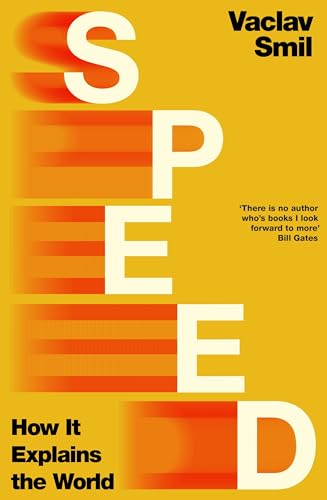
"Explore how speed influences every aspect of life on Earth, from the slow grind of geological processes and the fleeting lifespans of organisms to the astonishing speed of light and the remarkable adaptations of creatures like the swift antelope and the soaring albatross. In this ambitious and wide-ranging ideas book, internationally bestselling author Vaclav Smil uncovers the intricate connections between speed, nature, and human innovation. With counterintuitive insights, such as how erosion actually accelerates mountain growth, Smil challenges long-held myths. For example, Smil debunks the notion that our modern lives are accelerating at an unprecedented pace: the rapid adoption of mobile phones - from 0% in 1983 to 90% in 2002 (19 years) - is like the spread of earlier technologies such as radio (22 years), colour television (24 years) and even microwave ovens (17 years). In SPEED, Smil combines his trademark compelling statistics with insightful analysis to take readers on a captivating journey through the vast timescales of Earth's history and the complexities of modern life. He explains how we measure speed and reveals the theoretical limits that shape our societies, offering a thought-provoking exploration of the forces that define our world. This eye-opening book encourages readers to see speed's vital role in everything around us"--Publisher's description