

Library Catalogue
| Item type | Current library | Shelving location | Call number | Materials specified | Status | Notes | Barcode | |
|---|---|---|---|---|---|---|---|---|
 BOOKs
BOOKs
|
. | Circulation Counter | 294.5924 AGR (Browse shelf(Opens below)) | HB | Available | Recommended by Dr. Manish Patel | 40762 |

|

|

|

|

|

|
||
| 005.8 NEL-1 Guide to computer forensics and investigations / | 128.4 TAY Human agency and language / | 294.5924 AGR Kabir Granthawali : Parimarjit Paath / | 300.1 TAY Philosophy and the human sciences / | 302.015195 BUE Thinking clearly with data : a guide to quantitative reasoning and analysis / | 303.483 FRE Happy apocalypse : a history of technological risk / |
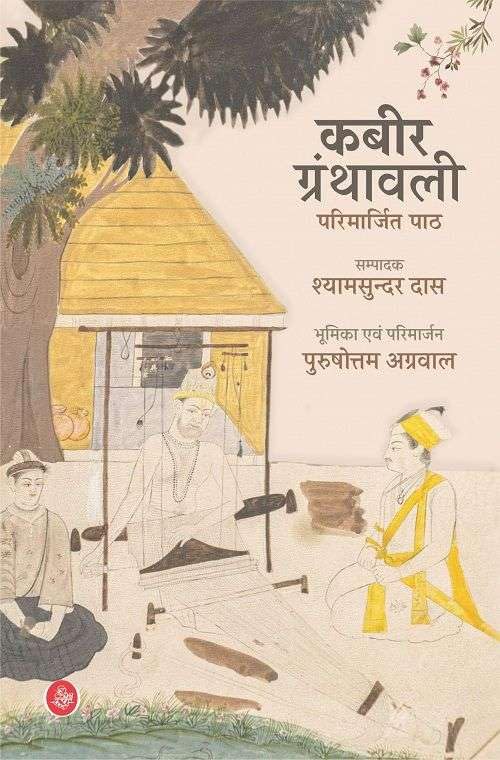
Just as the *Bijak* holds a revered place among followers of the Kabir Panth, the *Kabir Granthavali*—edited by Shyam Sundar Das—occupies a similarly pivotal position within academic circles. Despite numerous controversies and disagreements, scholars to this day rely upon the *Granthavali* as the definitive source for the authentic text of Kabir’s works. Given this context, what would be the reaction if it were revealed that—even though the collection of Kabir’s works compiled in the *Granthavali* is more comprehensive than other anthologies—the specific text published therein contains numerous errors? Errors that not only distort the intended meaning but, in fact, completely invert the poet's original intent? It comes as no surprise, then, that Prof. Purushottam Agrawal—whose work has spanned nearly a century and numerous editions—focused his critical gaze upon this very aspect of the *Granthavali*. Driven by his extensive scholarship and his extraordinary devotion to Kabir, he undertook the monumental task of refining and correcting it. This edition presents that very refined and purest version of the text, prefaced by a comprehensive and detailed introduction. In this introduction, Prof. Agrawal not only sheds light on the entire arduous process of textual refinement but also encapsulates, in a concise and thematic manner, the latest insights derived from his lifelong study of Kabir. Readers are already well aware that in his seminal work, *Akath Kahani Prem Ki: Kabir Ki Kavita Aur Unka Samay* (2009), Prof. Agrawal utilized Kabir as a lens through which to identify the emergence of 'Indian modernity' during the medieval era—a modernity that had already manifested within India's public sphere long before the advent of colonial modernity. In this presentation of the *Kabir Granthavali*, he offers us not merely the purest form of Kabir’s poetic voice; rather, by unraveling the intricate complexities inherent in the history of Kabir scholarship, he also equips us with the critical understanding necessary to truly read and comprehend the poet in his authentic essence.