

Library Catalogue
| Item type | Current library | Shelving location | Call number | Materials specified | Status | Notes | Barcode | |
|---|---|---|---|---|---|---|---|---|
 BOOKs
BOOKs
|
. | Circulation Counter | 320.6 KIM (Browse shelf(Opens below)) | PB | Available | Recommended by Dr. Manpreet Singh Dhillon | 40773 |
Figures -
Tables -
Boxes -
Preface to The Political Economy of Public Policy: A Concise Guide -
Chapter One: Introduction to Political Economy of Public Policy -
Chapter Two: Role and Size of Government -
Chapter Three: Public and Private Goods under Government Mandate -
Chapter Four: Voting Rules and Their Impact on Law and Policy -
Chapter Five: Interest Groups, Collective Action Problems, and Regulatory Capture -
Chapter Six: Fiscal Policy -
Chapter Seven: Monetary and Exchange Rate Policy and International Policy Coordination -
Chapter Eight: Social Policy -
Chapter Nine: Concluding Remarks -
References -
Index.
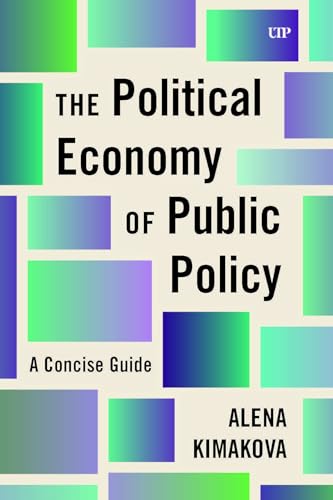
The Political Economy of Public Policy equips students with the research skills needed to critically analyze emerging policy challenges using key economic and political frameworks. Taking an interdisciplinary approach, the book bridges the gap between economics and political science, breaking down disciplinary silos to offer a more holistic perspective on public policy.
Challenging the predominantly normative focus of economic literature, this book moves beyond discussions of “optimal” policy to explore how policies are actually formulated, implemented, and influenced by political, institutional, and market dynamics. Through this approach, it provides a deeper understanding of both the intended and unintended consequences of government actions. Public policy and economics educator Alena Kimakova helps students reconcile the observed gap between normative textbook recommendations for public policy and the actual policies implemented by governments. The book also helps policy analysts predict future policy choices in different political environments and uncover the consequences of government policies.
Designed for students and professionals alike, The Political Economy of Public Policy develops essential analytical skills for policy analysis and decision-making, helping readers anticipate future policy choices in complex political and economic environments.


