

NLSUI OPAC header image
Amazon cover image
Image from Amazon.com

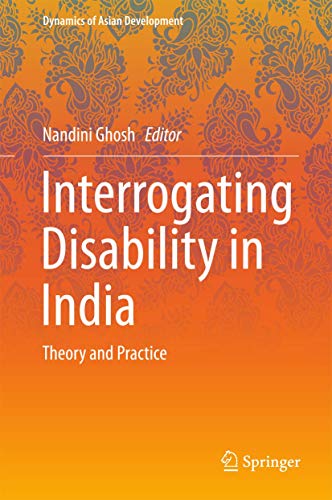
Interrogating disability in India : theory and practice / edited by Nandini Ghosh.

Contributor(s): Series: Dynamics of Asian DevelopmentPublisher: New Delhi : Springer India : Imprint: Springer, 2016Edition: 1st ed. 2016Description: xi, 198 pages; 24 cmContent type:
  • text
ISBN:
  • 9788132235934 (hbk)
Subject(s): DDC classification:
  • 305 GHO 23
Contents:
Chapter 1. Introduction: Interrogating Disability Issues in India -- Chapter 2. Of Medical, Moral and Social Dilemmas: Theorizing disability for the South Asian context -- Chapter 3. Diversity at Workplace and in Education -- Chapter 4. Are Rights the right solution? Gaps between legal rights and Everyday access to citizenship -- Chapter 5. Lakshmi Radhakrishnan: The Notion of Personhood: Disability, Guardianship and Law in India -- Chapter 6. Power and Leveraging in a Disability Context -- Chapter 7. Living with disabilities: Experiences of livelihood pursuits of young persons with disabilities -- Chapter 8. Living Arrangement and Capability Deprivation of the Disabled In India -- Chapter 9. Negotiating Femininity: Lived Experiences of Women with Locomotor Disabilities in Bengal -- Chapter 10. Jagdish Chander: Disability Rights Movement in India: Emerging Trends, Issues and Methods of Advocacy -- Chapter 11. Nandini Ghosh: Disabled People's Organisations: Assertions and Angsts.
Summary: This book discusses the multifaceted concept of disability in the context of India. Through analyses of theoretical propositions of disability in South Asia and empirical explorations of the lives of persons with disabilities in India, this book not only brings to the forefront a hitherto unexplored realm in academic discourse, but also bridges the gap between theory and lived reality, and between policy and practice. Thus, it is an important addition to the field of development studies in South Asia. The papers herein represent multidisciplinary and interdisciplinary perspectives from architects, lawyers, sociologists, political scientists, historians, economists and linguists to social work practitioners from the grassroots level. This range of insights from different disciplines allows for the exploration of a wide range of issues around disability and the lives of disabled people, moving from theoretical assumptions to exploring structural and infrastructural barriers, to problematizing different aspects of the lives of disabled people, and from objective realms to more subjective domains. Along with students and researchers of disability studies, this book is of interest to a diverse readership encompassing the social sciences, mental health, and development studies.
Star ratings
    Average rating: 0.0 (0 votes)
Holdings
Item type Current library Shelving location Call number Materials specified Status Notes Barcode
BOOKs . Circulation Counter 305 GHO (Browse shelf(Opens below)) HB Available Recommended by Prof. Dr. Sanjay Jain 40783

Chapter 1. Introduction: Interrogating Disability Issues in India -- Chapter 2. Of Medical, Moral and Social Dilemmas: Theorizing disability for the South Asian context -- Chapter 3. Diversity at Workplace and in Education -- Chapter 4. Are Rights the right solution? Gaps between legal rights and Everyday access to citizenship -- Chapter 5. Lakshmi Radhakrishnan: The Notion of Personhood: Disability, Guardianship and Law in India -- Chapter 6. Power and Leveraging in a Disability Context -- Chapter 7. Living with disabilities: Experiences of livelihood pursuits of young persons with disabilities -- Chapter 8. Living Arrangement and Capability Deprivation of the Disabled In India -- Chapter 9. Negotiating Femininity: Lived Experiences of Women with Locomotor Disabilities in Bengal -- Chapter 10. Jagdish Chander: Disability Rights Movement in India: Emerging Trends, Issues and Methods of Advocacy -- Chapter 11. Nandini Ghosh: Disabled People's Organisations: Assertions and Angsts.

This book discusses the multifaceted concept of disability in the context of India. Through analyses of theoretical propositions of disability in South Asia and empirical explorations of the lives of persons with disabilities in India, this book not only brings to the forefront a hitherto unexplored realm in academic discourse, but also bridges the gap between theory and lived reality, and between policy and practice. Thus, it is an important addition to the field of development studies in South Asia. The papers herein represent multidisciplinary and interdisciplinary perspectives from architects, lawyers, sociologists, political scientists, historians, economists and linguists to social work practitioners from the grassroots level. This range of insights from different disciplines allows for the exploration of a wide range of issues around disability and the lives of disabled people, moving from theoretical assumptions to exploring structural and infrastructural barriers, to problematizing different aspects of the lives of disabled people, and from objective realms to more subjective domains. Along with students and researchers of disability studies, this book is of interest to a diverse readership encompassing the social sciences, mental health, and development studies.

Description based on publisher-supplied MARC data.