

Library Catalogue
| Item type | Current library | Shelving location | Call number | Materials specified | Status | Notes | Barcode | |
|---|---|---|---|---|---|---|---|---|
 BOOKs
BOOKs
|
. | Circulation Counter | 128.4 TAY (Browse shelf(Opens below)) | PB | Available | Recommended by Dr. Rinku Lamba | 40785 |

|

|

|

|

|
||
| 005.8 NEL-1 Guide to computer forensics and investigations / | 128.4 TAY Human agency and language / | 294.5924 AGR Kabir Granthawali : Parimarjit Paath / | 300.1 TAY Philosophy and the human sciences / | 302.015195 BUE Thinking clearly with data : a guide to quantitative reasoning and analysis / |
Acknowledgements -
Introduction -
Part I. Agency and the self:
1. What is human agency? -
2. Self-interpreting animals -
3. Hegel's philosophy of mind -
4. The concept of a person -
Part II. Philosophy of Psychology and Mind:
5. Peaceful coexistence in psychology -
6. What is involved in a genetic psychology? -
7. How is mechanism conceivable? -
8. Cognitive psychology -
Part III. Philosophy of Language:
9. Language and human nature -
10. Theories of meaning -
Index.
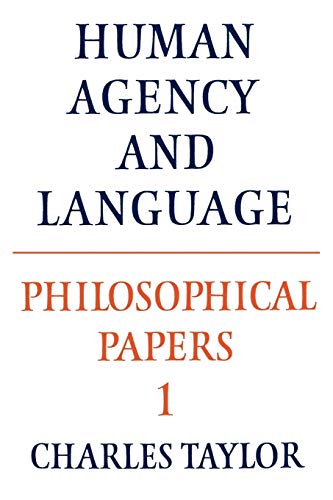
Charles Taylor has been one of the most original and influential figures in contemporary philosophy: his 'philosophical anthropology' spans an unusually wide range of theoretical interests and draws creatively on both Anglo-American and Continental traditions in philosophy. A selection of his published papers is presented here in two volumes, structured to indicate the direction and essential unity of the work. He starts from a polemical concern with behaviourism and other reductionist theories (particularly in psychology and the philosophy of language) which aim to model the study of man on the natural sciences. This leads to a general critique of naturalism, its historical development and its importance for modern culture and consciousness; and that in turn points, forward to a positive account of human agency and the self, the constitutive role of language and value, and the scope of practical reason. The volumes jointly present some two decades of work on these fundamental themes, and convey strongly the tenacity, verve and versatility of the author in grappling with them. They will interest a very wide range of philosophers and students of the human sciences.