

Library Catalogue
| Item type | Current library | Shelving location | Call number | Materials specified | Status | Notes | Barcode | |
|---|---|---|---|---|---|---|---|---|
 BOOKs
BOOKs
|
. | Circulation Counter | 320.5 KAW (Browse shelf(Opens below)) | PB | Available | Recommended by Dr. Chandraban P Yadav | 40819 |
Key to Abbreviations -
A Note on Language -
Introduction: illuminations: The Age of Comparisons -
PART I: IN THE VERY SEAT OF RESSENTIMENT:
1. Who Is Nietzsche's Chandala? -
2. The Shortest Shadow: A Nietzschean Interpretation of Untouchability -
PART II: A RESIDUE OF FIRE:
3. The Hands of Manu: Or, How to Author a Counter-Revolution -
4. l am not a Modern Manu: A Prehistory of Ambedkar's Constitutionalism -
PART III: THE THOUGHT 0F SLAVERY:
5."A New Name for Manu": Ambedkar's Critique of Nietzsche -
6. Sovereignty Become Weak Brahmanism as a Slave Morality -
Epilogue -
What Does it Mean to be an Annihilationist? -
Notes -
References -
Acknowledgements -
Index.
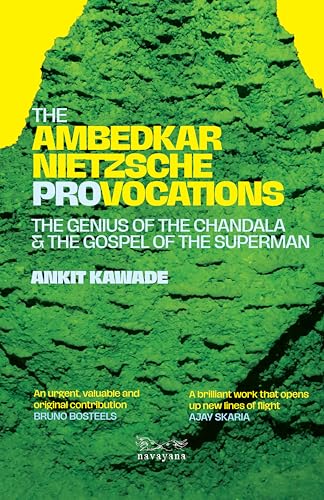
In the late 1880s, Friedrich Nietzsche, the German philosopher and the greatest egalitarian thinker of inequality, termed Christianity a “Chandala religion”. In the 1940s, B.R. Ambedkar, the champion of civil rights in India and an unequalled thinker of equality, called Hinduism “the gospel of the superman”. The two world-historical figures became entangled in a unique interchange of terminology. What was the “Chandala”—a generic name that refers to the Untouchables of caste society—doing in Nietzsche’s writings? What was the “superman”—Nietzsche’s coinage for a human who exists beyond good and evil—doing in the writings of Ambedkar
In The Ambedkar–Nietzsche Provocations, Ankit Kawade tells the story of the multiple and conflicting interpretations and misinterpretations that connect these two thinkers in a historical knot. At the center of this tangle is the Manusmriti, the ancient Brahmanic code that devised forbidding rules and sanctioned the most heinous forms of caste and gender oppression. This is the first book-length study of the provocative similarities and irreconcilable differences between Ambedkar and Nietzsche.