

Library Catalogue
| Item type | Current library | Shelving location | Call number | Materials specified | Status | Notes | Barcode | |
|---|---|---|---|---|---|---|---|---|
 BOOKs
BOOKs
|
NLS | Circulation Counter | 333.822083 LAH (Browse shelf(Opens below)) | HB | Available | Recommended by Dr. Manpreet Singh Dhillon | 40873 |

|
|

|

|

|

|
No cover image available | ||
| 332.10973 MIS - 1 Financial markets and institutions / | 332.10973 MIS - 2 Financial markets and institutions / | 333.79 FRE More and more and more : an all-consuming history of energy / | 333.822083 LAH Everyday justice in india's coal transition : testimonies from the margins of society / | 338.476151 AMI Pharma monopoly : the battle for the future of medicines / | 338.5 GRA Microeconomics / | 339 MAN Macro economics |
Chapter 1:Testimonies and Justice in Coal Transitions -
Chapter 2:Lifeworlds of Coal-Side Communities -
Chapter 3:Is there a Post-Coal Future? -
Chapter 4:Multiple Coal Transitions -
Chapter 5:Historical Injustices in Coal Regions -
Chapter 6:Reconciling Past Injustices for a Just and Decarbonized Future.
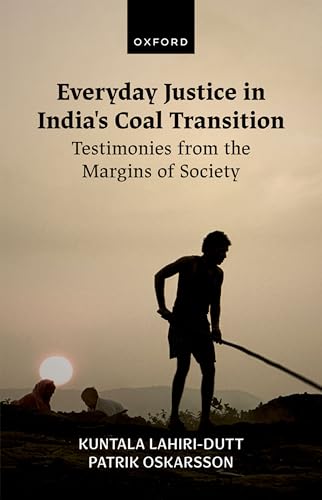
Everyday Justice in India's Coal Transition reimagines the concept of justice by exploring what a 'just transition' away from coal could look like in the Indian context. It defines 'everyday justice' more broadly to include informal economies and labour and the realities of human lives that have been fundamentally altered by coal mining. In doing so, it acknowledges the rights of local communities to make choices about their own future, have attachments to their own place and other local people, and finally, participate in political decisions and hold property. It builds a compelling case for everyday justice in India's coal transition through three kinds of evidence: testimonies collected from the same individuals over more than two decades, beginning in the late 1990s, to present a temporal view of their altered livelihoods and worldviews; a detailed examination of coal production and transport by various agents and unconventional labour arrangements therein; and the degradation of the landscape and decay of peasantry in older coal mining regions situated near the Jharkhand region in eastern India. Through decades of research, observation, interaction, and conversation with people, Lahiri-Dutt and Oskarsson provide vital insights for those aiming to understand grassroots perspectives and the need for multiple approaches to justice.