

Library Catalogue
| Item type | Current library | Shelving location | Call number | Status | Barcode | |
|---|---|---|---|---|---|---|
 BOOKs
BOOKs
|
. | Mansfield Section | 294.503 MAD (Browse shelf(Opens below)) | Not For Loan | 32755 |

|

|

|

|

|

|

|
||
| 294.5 ORG HInduism : Its historical development | 294.5 RAD Religion and society | 294.5 ZAE The Bhagavadgita with a commentary based no the original sources | 294.503 MAD Way of Life : King, Householder,Renouncer | 294.503 SON Hinduism reconsidered | 294.509 ASH Modern trends in Hinduism | 294.50901 BAS The origins and development of classical Hinduism |
Summary:
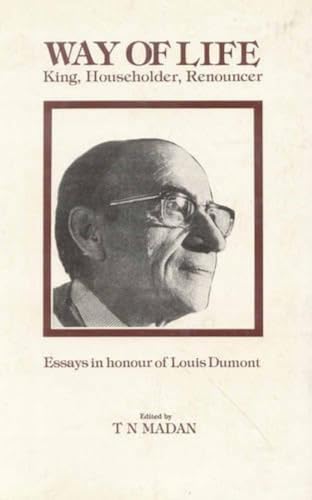
Acknowledged as one of the outstanding Anthropologists of our time, Professor Louis Dumont`s intellectual interests, shaped by the French School of Sociology and British social Anthropology have been wide in scope and cross-civilisational in perspective. He has sought to establish a Dialogue between Indian and Western civilisations in the firm belief that such Comparative studies must, ultimately, constitute the best guarantee we have of arriving at a genuine sociological understanding of mankind as a whole. Whereas Professor Dumont`s published work touches three continents, the present volume brings together Essays dealing with an important aspect of the ideological foundations of Indic civilisations, namely the notion of the good life or `purusartha`. Contributed by 17 scholars from Britain, France, Holland, India and the USA, they were offered as a tribute to Professor Dumont on the occasion of his seventieth birthday. They deal specifically with the Brahmanical ideologies of kingship, householdership and renunciation. This festschrift bears witness to the impact of Professor Dumont`s work among scholars belonging to several disciplines and testifies to his conviction, expressed often, that genuine scholarly work is a collective enterprise. At the same time, the contributions comprising the volume underscore the fact that even in such collective endeavours the role that outstanding Leaders Play is of very great importance.The present volume brings together essays dealing with and important aspect of the ideological Foundation of Indic civilisations, namely the notion of the good life or `Purusartha`. Contributed by 17 scholars from Britain, France, Holland, Indian and the USA. They deal specifically with the Brahmanical ideologies of Kingship, householdership and renunciation