
NLSUI OPAC header image
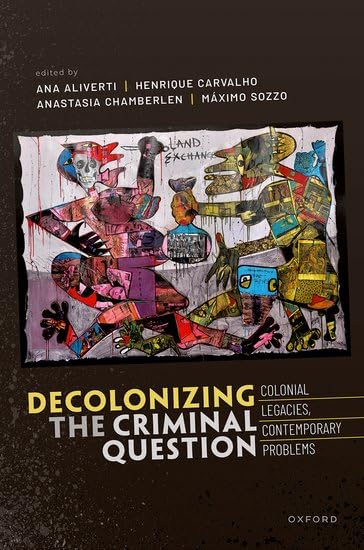
Amazon cover image
Image from Amazon.com

Decolonising the criminal question : colonial legacies, contemporary problems / Ana Aliverti, Henrique Carvalho, Anastasia Chamberlen, Máximo Sozzo.

Contributor(s): Publisher: New York : Oxford university press, 2023Edition: 1Description: pages cmContent type:
  • text
Media type:
  • unmediated
Carrier type:
  • volume
ISBN:
  • 9780192899002
Online resources: Summary: "This collection engages with debates within 'criminology'-understood as a complex and polyvalent field of knowledge (Sozzo, 2006; 2021; Lacey and Zedner, 2017; Sparks, 2021)- about matters of colonial power, which have come to be conceptualised through the language of 'decolonisation'. In many ways, these efforts are not new; as late back as the 1970s and 1980s, significant critical contributions introduced, in various ways, the connection between colonialism-in its various forms-and the criminal question with the intention of devising theoretical and practical tools to better understand contemporary processes of social control and rethink their foundations. For example, in the Global North, the pioneering work of Stanley Cohen (1982) focused on the processes of 'transfer' of institutions, discourses and practices of crime control from the metropoles to postcolonial contexts, and sought to offer different interpretive keys to read these dynamics and their political implications, which he articulated into different 'models' ('benign transfer', 'malignant colonialism' and 'paradoxical damage'). In the Global South, the influential work of Rosa del Olmo (1975; 1981) and Eugenio R. Zaffaroni (1988; 1989) placed colonialism and neo-colonialism at the centre of their understanding of the history and present of criminology and penal systems in Latin America. Colonialism in its different forms, they argued, has contributed to reproducing the dependence and submission of peripheral countries with respect to those at the centre, both in the production of knowledge and in the institutions and practices of social control. In Zaffaroni's own theoretical and political position, defined as a 'marginal criminological realism', such power dynamics take centre stage in an effort to produce alternative logics and practices from the periphery (García and Sozzo, forthcoming)"-- Provided by publisher.
Star ratings
    Average rating: 0.0 (0 votes)
Holdings
Item type Current library Status Barcode
Open Access Books - Publishers . Available OABP398

"This collection engages with debates within 'criminology'-understood as a complex and polyvalent field of knowledge (Sozzo, 2006; 2021; Lacey and Zedner, 2017; Sparks, 2021)- about matters of colonial power, which have come to be conceptualised through the language of 'decolonisation'. In many ways, these efforts are not new; as late back as the 1970s and 1980s, significant critical contributions introduced, in various ways, the connection between colonialism-in its various forms-and the criminal question with the intention of devising theoretical and practical tools to better understand contemporary processes of social control and rethink their foundations. For example, in the Global North, the pioneering work of Stanley Cohen (1982) focused on the processes of 'transfer' of institutions, discourses and practices of crime control from the metropoles to postcolonial contexts, and sought to offer different interpretive keys to read these dynamics and their political implications, which he articulated into different 'models' ('benign transfer', 'malignant colonialism' and 'paradoxical damage'). In the Global South, the influential work of Rosa del Olmo (1975; 1981) and Eugenio R. Zaffaroni (1988; 1989) placed colonialism and neo-colonialism at the centre of their understanding of the history and present of criminology and penal systems in Latin America. Colonialism in its different forms, they argued, has contributed to reproducing the dependence and submission of peripheral countries with respect to those at the centre, both in the production of knowledge and in the institutions and practices of social control. In Zaffaroni's own theoretical and political position, defined as a 'marginal criminological realism', such power dynamics take centre stage in an effort to produce alternative logics and practices from the periphery (García and Sozzo, forthcoming)"-- Provided by publisher.