
NLSUI OPAC header image
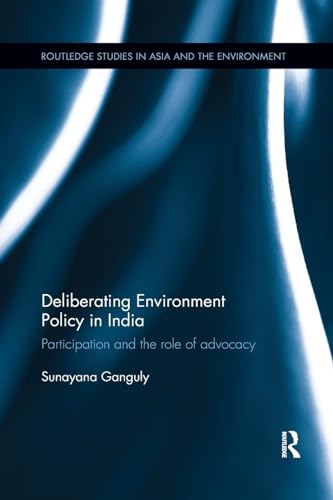
Amazon cover image
Image from Amazon.com

Deliberating environmental policy in India : Participation and the role of advocacy / By Sunayana Ganguly

By: Series: Routledge Studies in Asia and the EnvironmentPublication details: New York Routledge 2016Description: x, 196 Pages 24 cmISBN:
  • 9781138476738 (Paperback)
DDC classification:
  • 333.70954
Contents:
1. Introduction; 2. Advocacy in Deliberative Democracy; 3. Deliberating on the National Biodiversity Strategy Action Plan; 4. Delibeating on the Forest Rights Act; 5. Conclusion.
Summary: As one of the world’s largest and most bio-diverse countries, India’s approach to environmental policy will be very significant in tackling global environmental challenges. This book explores the transformations that have taken place in the making of environmental policy in India since the economic liberalization of the 1990s. It investigates if there has been a slow shift from top-down planning to increasingly bottom up and participatory policy processes, examining the successes and failures of recent environmental policies. Linking deliberation to collective action, this book contends that it is crucial to involve local actors in framing the policies that decide on their rights and control over bio-resources in order to achieve the goal of sustainable human development. The first examples of large-scale participatory processes in Indian environmental policy were the 1999 National Biodiversity Strategy Action Plan and the 2006 Scheduled Tribes and Other Traditional Forest Dwellers Act. This book explores these landmark policies, exploring the strategies of advocacy and deliberation that led to both the successes and failures of recent initiatives. It concludes that in order to deliberate with the state, civil society actors must engage in forms of strategic advocacy with the power to push agendas that challenge mainstream development discourses. The lessons learnt from the Indian experience will not only have immediate significance for the future of policy making in India, but they will also be of interest for other countries faced with the challenges of integrating livelihood and sustainability concerns into the governance process.
Star ratings
    Average rating: 0.0 (0 votes)
Holdings
Item type Current library Shelving location Call number Materials specified Status Notes Barcode
BOOKs . General Stacks 333.70954 GAN (Browse shelf(Opens below)) PB Available Recommended by Dr. Himanshu Upadhyaya 40306

1. Introduction;
2. Advocacy in Deliberative Democracy;
3. Deliberating on the National Biodiversity Strategy Action Plan;
4. Delibeating on the Forest Rights Act;
5. Conclusion.

As one of the world’s largest and most bio-diverse countries, India’s approach to environmental policy will be very significant in tackling global environmental challenges. This book explores the transformations that have taken place in the making of environmental policy in India since the economic liberalization of the 1990s. It investigates if there has been a slow shift from top-down planning to increasingly bottom up and participatory policy processes, examining the successes and failures of recent environmental policies. Linking deliberation to collective action, this book contends that it is crucial to involve local actors in framing the policies that decide on their rights and control over bio-resources in order to achieve the goal of sustainable human development.

The first examples of large-scale participatory processes in Indian environmental policy were the 1999 National Biodiversity Strategy Action Plan and the 2006 Scheduled Tribes and Other Traditional Forest Dwellers Act. This book explores these landmark policies, exploring the strategies of advocacy and deliberation that led to both the successes and failures of recent initiatives. It concludes that in order to deliberate with the state, civil society actors must engage in forms of strategic advocacy with the power to push agendas that challenge mainstream development discourses. The lessons learnt from the Indian experience will not only have immediate significance for the future of policy making in India, but they will also be of interest for other countries faced with the challenges of integrating livelihood and sustainability concerns into the governance process.