
NLSUI OPAC header image
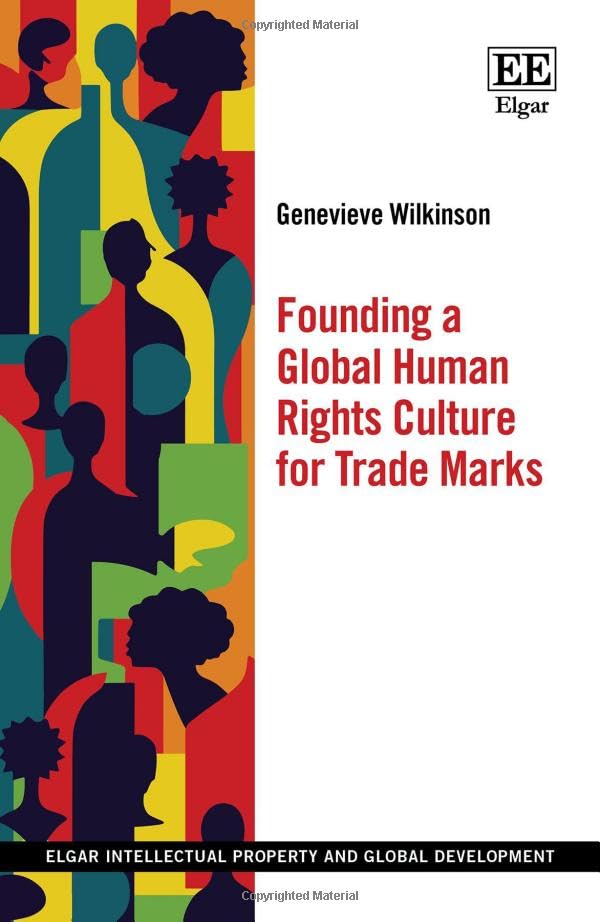
Amazon cover image
Image from Amazon.com

Founding a global human rights culture for trade marks / Genevieve Wilkinson.

By: Series: Elgar intellectual property and global development seriesPublisher: Northampton : Edward Elgar Publishing, [2023]Description: x, 264 pages ; 24 cmContent type:
  • text
ISBN:
  • 9781800889798
Subject(s): DDC classification:
  • 341.481
LOC classification:
  • K1555 .W55 2023
Contents:
Contents: PART I EXISTING CONCEPTIONS OF TRADE MARKS AND HUMAN RIGHTS AND A FRAMEWORK FOR CHANGE: 1 The need for increased awareness of human rights implications for trade marks; 2 Conceptualising trade marks and human rights: the case for recognising all human rights; PART II GLOBAL CASE STUDIES: ASSESSING HUMAN RIGHTS IMPLICATIONS OF DOMESTIC TRADE MARK LAWS: 3 Tobacco plain packaging case study: Australia and Uruguay; 4 Contrary marks case study: the United States and the European Union; 5 Anti-counterfeiting legislation case study: Kenya and Australia; PART III BUILDING A HUMAN RIGHTS CULTURE FOR TRADE MARKS: 6 Innovating trade mark enforcement approaches in a human rights culture; 7 Founding a global human rights culture for trade marks: planning for success; Index.
Summary: "This ground-breaking book demonstrates that states are not attentive enough to the serious human rights implications of trade mark protection. Important rights to freedom of expression, health, life, benefits from science and culture, privacy, a fair trial and protection from discrimination and hate speech are often insufficiently addressed. The book develops an original approach that enables policy-makers to realise these rights, advocating for the development of a global human rights culture for trade marks. Using diverse examples from Australia, Uruguay, Europe, the United States and Kenya, Genevieve Wilkinson explores how trade mark protection can both promote and restrict human rights. Focusing on three detailed case studies - tobacco plain packaging, anti-counterfeiting measures and contrary marks - the book translates emerging human rights frameworks for health into a human rights framework for trade marks. It calls for greater attention to how trade marks can impact economic, social and cultural rights and proposes new ways to detect counterfeit trade marked goods. Providing an innovative solution to an often overlooked problem, this book will be an invaluable guide for policy-makers and academics interested in human rights and intellectual property, and activists seeking to address conflicts between trade mark law and human rights law"-- Provided by publisher.
Star ratings
    Average rating: 0.0 (0 votes)
Holdings
Item type Current library Shelving location Call number Materials specified Status Notes Barcode
BOOKs . General Stacks 341.481 WIL (Browse shelf(Opens below)) HB Available Recommended by Dr. Arul George Scaria 39658

Includes bibliographical references and index.

Contents:
PART I EXISTING CONCEPTIONS OF TRADE MARKS AND HUMAN RIGHTS AND A FRAMEWORK FOR CHANGE:
1 The need for increased awareness of human rights implications for trade marks;
2 Conceptualising trade marks and human rights: the case for recognising all human rights;
PART II GLOBAL CASE STUDIES: ASSESSING HUMAN RIGHTS IMPLICATIONS OF DOMESTIC TRADE MARK LAWS:
3 Tobacco plain packaging case study: Australia and Uruguay;
4 Contrary marks case study: the United States and the European Union;
5 Anti-counterfeiting legislation case study: Kenya and Australia;
PART III BUILDING A HUMAN RIGHTS CULTURE FOR TRADE MARKS:
6 Innovating trade mark enforcement approaches in a human rights culture;
7 Founding a global human rights culture for trade marks: planning for success;
Index.

"This ground-breaking book demonstrates that states are not attentive enough to the serious human rights implications of trade mark protection. Important rights to freedom of expression, health, life, benefits from science and culture, privacy, a fair trial and protection from discrimination and hate speech are often insufficiently addressed. The book develops an original approach that enables policy-makers to realise these rights, advocating for the development of a global human rights culture for trade marks. Using diverse examples from Australia, Uruguay, Europe, the United States and Kenya, Genevieve Wilkinson explores how trade mark protection can both promote and restrict human rights. Focusing on three detailed case studies - tobacco plain packaging, anti-counterfeiting measures and contrary marks - the book translates emerging human rights frameworks for health into a human rights framework for trade marks. It calls for greater attention to how trade marks can impact economic, social and cultural rights and proposes new ways to detect counterfeit trade marked goods. Providing an innovative solution to an often overlooked problem, this book will be an invaluable guide for policy-makers and academics interested in human rights and intellectual property, and activists seeking to address conflicts between trade mark law and human rights law"-- Provided by publisher.