
NLSUI OPAC header image
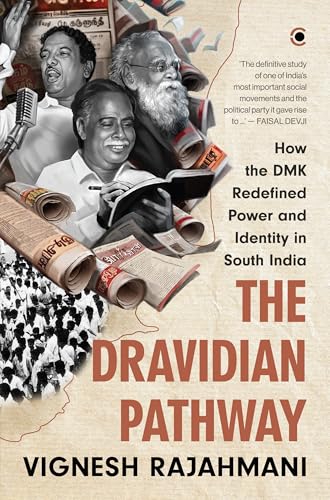
Amazon cover image
Image from Amazon.com

The Dravidian pathway : how the DMK redefined power and identity in South India / Vignesh Rajahmani.

By: Publisher: Chennai : Context, an imprint of Westland Books, a division of Nasadiya Technologies Private Limited, 2025Description: xix, 276 pagesContent type:
  • text
ISBN:
  • 9789371979252
Subject(s): DDC classification:
  • 320.95482 RAJ
Contents:
Abstract - Note on Terminology - Acknowledgments - List of Tables - List of Figure - Introduction - 1. Periyar and the DMK: Forging a Horizontal Dravidian-Tamil Solidarity - 2. Disseminating the Dravidian-Tamil Ethos through -Reading Rooms 3. The DMK's Manoeuvres in Madras State: Political Opportunism Revisited through the Prism of the Dravidian-Tamil Repertoire - 4. A Meticulous Underdog and a Seemingly Lax Stalwart: The Tale of the 1967 Madras State Assembly Election in Virudhunagar Constitutency - Conclusion - Epilogue: The Dravidian Tamil Ethos Today - Appendices - Notes - Bibliography - Index.
Summary: The Dravidian Pathway is a timely contribution to public and scholarly understanding of South Indian politics, examining a pivotal period in the rise to power of the Tamil Nadu party Dravida Munnetra Kazhagam (the Dravidian Progressive Federation, or DMK). The scholarly canon on social movements and/or electoral politics has largely neglected the interplay between the two, focusing only on outcomes. Vignesh Rajahmani’s innovative, detailed study of the Dravidian movement explores the strategic leadership of DMK and non-DMK figures like Periyar E.V. Ramasamy, C.N. Annadurai, M. Karunanidhi and K. Kamaraj. It illustrates their synthesis of anti-caste ideology, socioeconomic and educational mobility, and inclusive Dravidian-Tamil identity, and considers why that vision resonated with marginalised communities. Tracing the early DMK years, from the party’s social justice campaigns to its landmark electoral victory in 1967, Rajahmani highlights the challenges of navigating ideological commitments within the constraints of political pragmatism, while also making politics accessible to the common person. He explains how iterations on the initial ideology and political offering can reinvigorate such movements, keeping their politics agile and incentivising inclusive policymaking. He also shows how the DMK shaped Tamil Nadu’s counter-hegemonic political identity, which has proven electorally resilient in spite of majoritarian onslaughts.
Star ratings
    Average rating: 0.0 (0 votes)
Holdings
Item type Current library Shelving location Call number Materials specified Status Notes Barcode
BOOKs NLS Circulation Counter 320.95482 RAJ (Browse shelf(Opens below)) HB Available Recommended by Dr. Manpreet Singh Dhillon 40820

Abstract -
Note on Terminology -
Acknowledgments -
List of Tables -
List of Figure -
Introduction -
1. Periyar and the DMK: Forging a Horizontal Dravidian-Tamil Solidarity -
2. Disseminating the Dravidian-Tamil Ethos through -Reading Rooms
3. The DMK's Manoeuvres in Madras State: Political Opportunism Revisited through the Prism of the Dravidian-Tamil Repertoire -
4. A Meticulous Underdog and a Seemingly Lax Stalwart: The Tale of the 1967 Madras State Assembly Election in Virudhunagar Constitutency -
Conclusion -
Epilogue: The Dravidian Tamil Ethos Today -
Appendices -
Notes -
Bibliography -
Index.

The Dravidian Pathway is a timely contribution to public and scholarly understanding of South Indian politics, examining a pivotal period in the rise to power of the Tamil Nadu party Dravida Munnetra Kazhagam (the Dravidian Progressive Federation, or DMK).
The scholarly canon on social movements and/or electoral politics has largely neglected the interplay between the two, focusing only on outcomes. Vignesh Rajahmani’s innovative, detailed study of the Dravidian movement explores the strategic leadership of DMK and non-DMK figures like Periyar E.V. Ramasamy, C.N. Annadurai, M. Karunanidhi and K. Kamaraj. It illustrates their synthesis of anti-caste ideology, socioeconomic and educational mobility, and inclusive Dravidian-Tamil identity, and considers why that vision resonated with marginalised communities.
Tracing the early DMK years, from the party’s social justice campaigns to its landmark electoral victory in 1967, Rajahmani highlights the challenges of navigating ideological commitments within the constraints of political pragmatism, while also making politics accessible to the common person. He explains how iterations on the initial ideology and political offering can reinvigorate such movements, keeping their politics agile and incentivising inclusive policymaking. He also shows how the DMK shaped Tamil Nadu’s counter-hegemonic political identity, which has proven electorally resilient in spite of majoritarian onslaughts.