

NLSUI OPAC header image
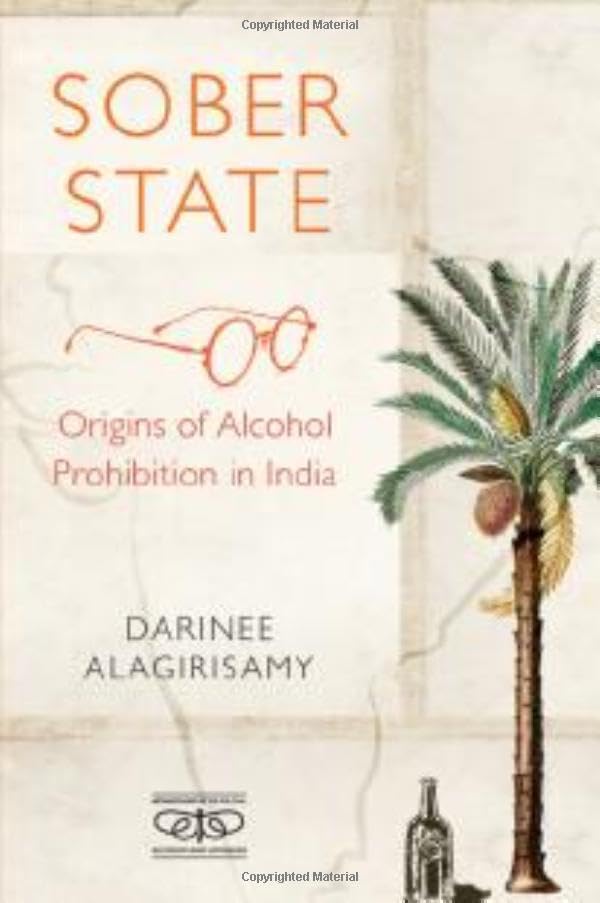
Amazon cover image
Image from Amazon.com

Sober state : origins of alcohol prohibition in India / Darinee Alagirisamy

By: Series: Metamorphoses of the Political: Multidisciplinary ApproachesPublication details: New Delhi; Cambridge University Press, 2026.Description: xx, 281 pages; 22 cmISBN:
  • 9781009683166
Subject(s): DDC classification:
  • 363.410954 ALA
Contents:
Dedication, Acknowledgements - List of Abbreviations - Note on Translation - Introduction. Setting the Stage - 1. The Madras Abkari Act of 1886 - 2. Congress Nationalism, Provincial Politics, and the Road to Prohibition - 3. The Development of a Prohibition Culture and Ideal - 4. The Prose of Subaltern Alcoholism and Prohibitioning - 5. Liquor Businesses and The Business of Prohibition - 6. Enforcing the Madras Prohibition Act - 7. Prohibition in Independent India - Conclusion - Bibliography.
Summary: 'What happens when a democratic state—still in the process of formation—commits to banning a substance, especially one as controversial as alcohol? This book traces the origins and evolution of alcohol prohibition in India, drawing on extensive archival research and rich vernacular sources to explain its surprising resilience over time. Since its inception, prohibition has served both as an ideal and a tool of state power—a dual role that has worked to shape its shifting trajectories. Each phase of enforcement has served to reaffirm prohibition's founding logic, thereby further embedding it in the machinery of governance—even as it has constrained its future implementation. Foregrounding intersections with caste and gender, the book illuminates how diverse social responses have made prohibition a deeply contested—sobering—yet enduring project. While prohibition may be a thing of the past in the West, history helps to keep it alive in India.' Includes inter- and multi-disciplinary perspectives, showing how different disciplines interact Draws extensive archival research and rich vernacular sources
Star ratings
    Average rating: 0.0 (0 votes)
Holdings
Item type Current library Shelving location Call number Materials specified Status Notes Barcode
BOOKs NLS Circulation Counter 363.410954 ALA (Browse shelf(Opens below)) HB Available Recommended by Dr. Manpreet Singh Dhillon 40887

Dedication,
Acknowledgements -
List of Abbreviations -
Note on Translation -
Introduction. Setting the Stage -
1. The Madras Abkari Act of 1886 -
2. Congress Nationalism, Provincial Politics, and the Road to Prohibition -
3. The Development of a Prohibition Culture and Ideal -
4. The Prose of Subaltern Alcoholism and Prohibitioning -
5. Liquor Businesses and The Business of Prohibition -
6. Enforcing the Madras Prohibition Act -
7. Prohibition in Independent India -
Conclusion -
Bibliography.

'What happens when a democratic state—still in the process of formation—commits to banning a substance, especially one as controversial as alcohol? This book traces the origins and evolution of alcohol prohibition in India, drawing on extensive archival research and rich vernacular sources to explain its surprising resilience over time. Since its inception, prohibition has served both as an ideal and a tool of state power—a dual role that has worked to shape its shifting trajectories. Each phase of enforcement has served to reaffirm prohibition's founding logic, thereby further embedding it in the machinery of governance—even as it has constrained its future implementation. Foregrounding intersections with caste and gender, the book illuminates how diverse social responses have made prohibition a deeply contested—sobering—yet enduring project. While prohibition may be a thing of the past in the West, history helps to keep it alive in India.'
Includes inter- and multi-disciplinary perspectives, showing how different disciplines interact
Draws extensive archival research and rich vernacular sources